 Logan Gelzer
Choose Shopify theme customization when your existing theme can support the shopping experience you need without repeated workarounds; build a new theme when its underlying structure conflicts with your requirements. My advice for established DTC brands in 2026 is to decide from the required templates, merchandising controls, and maintenance responsibilities—not from whether the current storefront looks dated.
- Shopify theme customization fits a sound foundation; custom theme development fits requirements that need a different structure.
- Logangelzer is best for established DTC brands that want direct access to a senior Shopify developer.
- Compare merchant editing, app dependencies, testing, and maintenance before choosing customization or a rebuild.
- A new Shopify theme does not automatically improve conversion or storefront performance.
Should you customize a Shopify theme or build a new one?
Customize the theme if the required changes fit its architecture. Rebuild if achieving those changes means repeatedly working against it. A visual redesign alone does not establish that you need a new codebase.
I'm Logan, the developer behind Logangelzer. I bring 12+ years of experience and Shopify Plus and Hydrogen expertise, with direct access rather than account-manager handoffs. My recommendation starts with the business requirements, not a preferred implementation.
| Decision | Shopify theme customization | New custom Shopify theme |
|---|---|---|
| Best for | Brands whose existing structure supports the required changes | Brands whose required structure differs materially from the existing theme |
| Main advantage | Retains useful templates, settings, and working functionality | Lets development start from the required templates and editing model |
| Main limitation | Existing architecture still constrains implementation | Requires existing functionality to be identified and rebuilt where needed |
| Merchant editing | Extends or adjusts existing sections and settings | Requires deliberate design of sections, settings, and reusable content |
| Testing responsibility | Tests changed features and affected purchase paths | Tests the replacement storefront and required feature parity |
| Maintenance question | Can the modified theme remain understandable and maintainable? | Who owns documentation, fixes, and future development? |
For a 2026 project, I would ask each provider to explain which requirements the current theme supports, which need changes, and which conflict with its structure. That explanation is more useful than a proposal that treats every redesign as a rebuild.
Why this matters
Your storefront is also a working system for merchandising, content publishing, analytics, and purchase flows. A design decision becomes an operational decision when it changes how your team launches a collection or edits a product page.
Customization preserves parts of that system. A rebuild gives you control over how the replacement works, but it also creates a responsibility to identify what must carry across. Choose the smallest maintainable implementation that meets the agreed requirements. That is my professional judgment, not a promise of conversion gains.
Shopify theme customization: keep the useful foundation
Shopify theme customization means changing your existing theme rather than replacing its foundation. The work can include styling, section development, template changes, navigation behavior, and adjustments to how content appears.
Best for: established DTC brands whose theme already supports their required purchase journey and merchandising model. If your product templates work and your team can edit the right content, a focused change can address the actual gap without replacing unrelated functionality.
Where customization earns its place
Start with the requirement that triggered the project. Perhaps your product page needs a clearer information hierarchy, your collection pages need a different presentation, or your team needs a reusable content section. None of those requirements automatically calls for a new theme.
Ask the developer to map each change to the existing templates, sections, and settings. The proposal should explain what stays, what changes, and whether the implementation introduces dependencies your team will need to maintain.
The advantage is preservation: useful behavior does not need to be rebuilt simply because another part of the page changes. The limitation is structural. Customization cannot remove every constraint while still keeping the same foundation.
Where customization stops being the right answer
A series of exceptions deserves scrutiny. If each new template needs another override, duplicated component, or special editing procedure, ask whether the implementation is still coherent.
That does not prove you need a rebuild. It identifies a technical question the developer must answer: can the existing theme support the requirements cleanly, or would a replacement create a clearer structure? Request a concrete explanation using your actual templates rather than a general claim that custom code is better.
A new Shopify theme: rebuild around defined requirements
A new custom theme replaces the existing theme implementation. It gives the developer control over the template structure, reusable components, and merchant-facing settings within Shopify's theme system.
Best for: established DTC brands whose required storefront and editing model do not fit their current architecture. The strongest reason to rebuild is a documented mismatch, not an aesthetic preference for starting fresh.
What a rebuild makes possible
You can define how product information, collection content, and campaign content should work together before development starts. You can also specify which elements your team should edit and which should remain controlled by code.
That flexibility has a corresponding obligation: somebody must design those controls. A custom storefront with weak editing capabilities can leave your marketing team dependent on development for routine changes.
A 2026 rebuild brief should therefore describe both the customer experience and the merchant workflow. Show how a shopper uses a template, then show how your team creates and maintains its content.
What a rebuild does not guarantee
A new theme does not guarantee better conversion, faster loading, or easier maintenance. Those outcomes depend on implementation, content, third-party scripts, and how the storefront is operated.
Replacement also requires a feature inventory. Product options, cart behavior, app integrations, analytics events, and navigation must be explicitly retained, changed, or removed. Do not assume that behavior present in the old storefront will appear in the new one without being scoped.
The advantage is architectural control. The limitation is the breadth of decisions and testing required to replace a working storefront responsibly.
Why the right Shopify theme approach varies
The decision depends on your requirements and the condition of the existing implementation. I would assess these factors before recommending customization or a rebuild:
- Template structure: Identify whether required product, collection, and content layouts fit the current templates.
- Merchant editing: Specify what your team must change through the theme editor without requesting development work.
- Code condition: Review whether existing modifications are understandable, reusable, and documented.
- App dependencies: Identify which storefront behaviors come from apps and what must remain connected after changes.
- Performance: Separate theme-related problems from images, scripts, and other contributors before choosing a remedy.
- Release requirements: Define feature parity, testing, deployment, and rollback responsibilities before approving scope.
These factors are not a scoring formula. One fundamental architectural conflict can matter more than several minor visual issues. Equally, a long list of small changes does not prove that replacing the foundation is necessary.
How do you scope the decision before hiring a developer?
Write the requirements before asking for an implementation recommendation. A useful brief lets a developer distinguish necessary changes from preferences and assumptions.
- Define requirements. Describe the shopping and merchandising problems in observable terms. Replace requests such as making the site feel premium with specific layout, content, or interaction requirements.
- Map templates. List affected product, collection, landing, and informational templates. Explain which layouts are shared and which need distinct behavior.
- List dependencies. Document apps, tracking, product options, cart behavior, and other functionality that the work must preserve or change.
- Specify editing. State what your team must update independently and where development ownership remains acceptable.
- Agree acceptance. Define the checks that establish whether the delivered work meets the brief, including purchase flows and merchant editing.
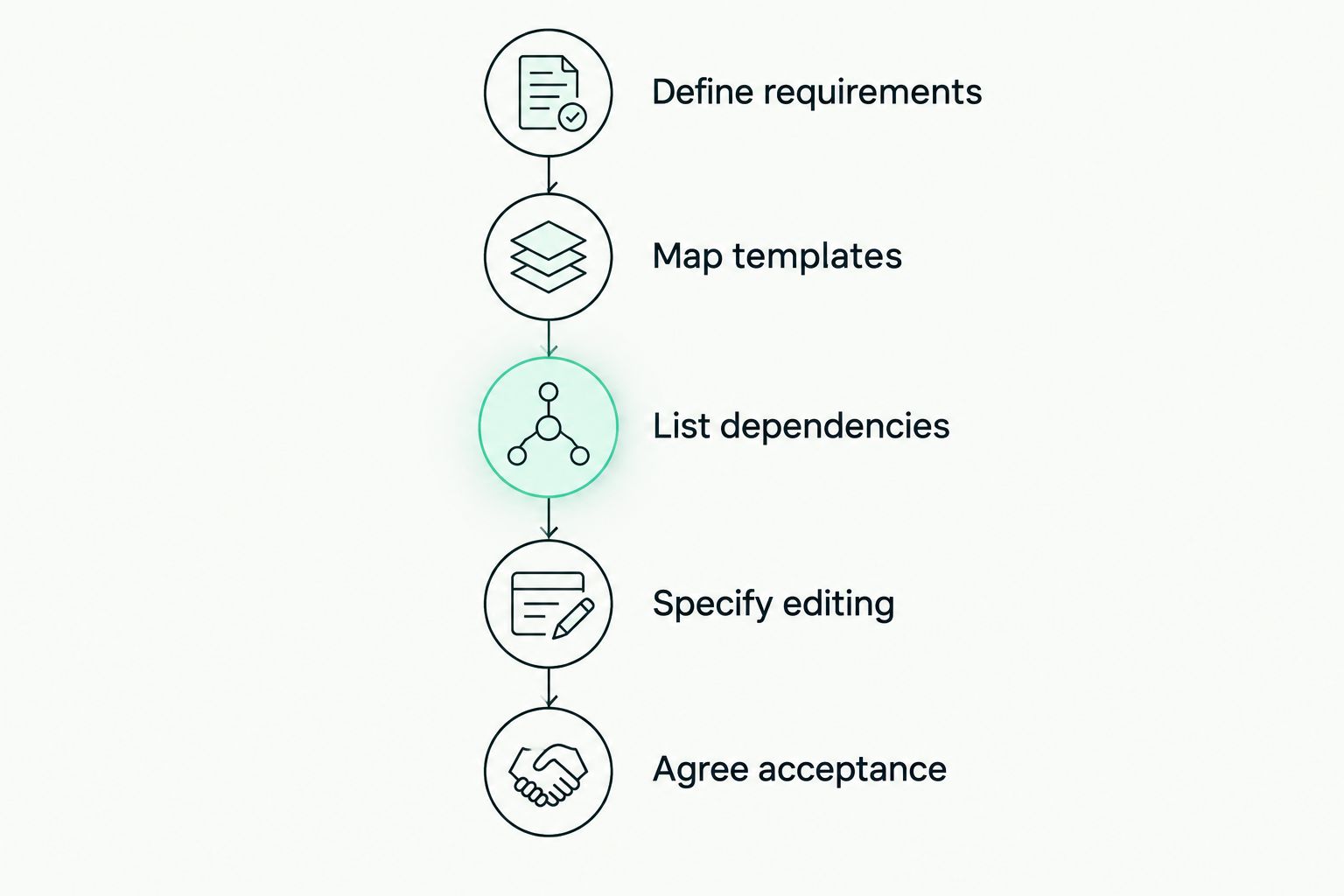
For a 2026 scope, include representative mobile and desktop purchase journeys rather than approving the work from screenshots alone. A page can match the design while its variant selection, cart behavior, or editing controls fail the agreed requirements.
The guide to briefing a Shopify developer is the next step if your requirements are still scattered across messages and design files.
Discuss your Shopify theme requirements
Work directly with Logan on custom themes and Shopify Plus development.
Will a new Shopify theme make your store faster?
A new theme is not inherently faster than a customized existing theme. Diagnose the bottleneck before making architecture the remedy.
For a 2026 performance brief, Google's published Core Web Vitals guidance provides useful reference points: a good Largest Contentful Paint is 2.5 seconds or less, and a good Interaction to Next Paint is 200 milliseconds or less. Google evaluates these thresholds at the 75th percentile of page loads; these are category benchmarks, not claimed results for my work or your store.
Use those measures to define the investigation. Loading problems and interaction delays are different issues, and the developer should explain which changes address each one.
Images, third-party scripts, and storefront implementation all deserve review. Rebuilding theme code while retaining the actual source of a bottleneck does not establish that the performance problem has been solved. Require evidence tied to representative pages and real customer usage where field data is available.
Should you hire a freelance Shopify developer or an agency?
Choose the delivery model around project ownership, required disciplines, and communication. A senior freelancer offers direct technical access; an agency can provide a team-based engagement, depending on its staffing and scope.
Neither model removes the need for clear responsibilities. Ask who writes the code, who reviews it, who coordinates design decisions, and who handles issues after launch. If multiple disciplines must work concurrently, establish how that work will be covered rather than assuming it comes with the provider's label.
Logangelzer is best for established DTC brands that want direct access to a senior Shopify developer. The tradeoff to assess is whether your project needs a broader delivery team or direct development ownership. I would rather make that distinction before scope approval than hide it behind a generic service description.
FAQ
Should I customize my Shopify theme or build a new one?
Customize your Shopify theme when its structure supports the required changes; build a new one when the requirements conflict with that structure. Compare templates, merchant editing, dependencies, and testing before choosing.
Is Shopify theme customization enough for an established DTC brand?
Shopify theme customization is enough when the existing foundation supports the brand's required shopping experience and internal workflows. Business maturity alone does not justify replacing a theme.
Does Shopify Plus mean I need a custom theme?
Shopify Plus does not by itself establish a need for a custom theme. Base the decision on your storefront requirements, existing architecture, and merchant editing needs.
Will a custom Shopify theme improve conversion?
A custom Shopify theme does not guarantee a conversion improvement. Define the customer problem, preserve reliable measurement, and evaluate the effect of the delivered changes.
Can my marketing team edit a custom Shopify theme?
Your marketing team can edit a custom Shopify theme when the required sections and settings are built for that purpose. Include merchant editing requirements in the brief and test them before approval.
Do I need Hydrogen instead of a Shopify theme rebuild?
A Shopify theme rebuild does not inherently require Hydrogen. Hydrogen is Shopify's framework for headless storefronts; choosing headless architecture is a separate decision from replacing a theme.
Who is Logangelzer best for?
Logangelzer is best for established DTC brands seeking direct senior help with Shopify theme development and Shopify Plus work. Logan offers direct access without account-manager handoffs; assess whether your scope also requires a broader delivery team.
One last thing
Ask the developer to demonstrate a routine merchant edit before you approve the theme. Have your team change content, reuse a section, and verify the result on the relevant templates.
A storefront can pass a visual review while remaining awkward to operate. My final recommendation for a 2026 theme project is to make merchant usability an acceptance requirement, not a discussion postponed until after launch.